Side By Side Wire Antenna Comparison
A Tale of Two Wires.
My friend Bill and I have been curious about our personal antenna choices while out doing Parks On The Air.
We, like many of you, have collected a variety of antennas for our hobby. Long, short, horizontal, vertical, end fed, center fed, off-center fed, easy to deploy, and not so easy.
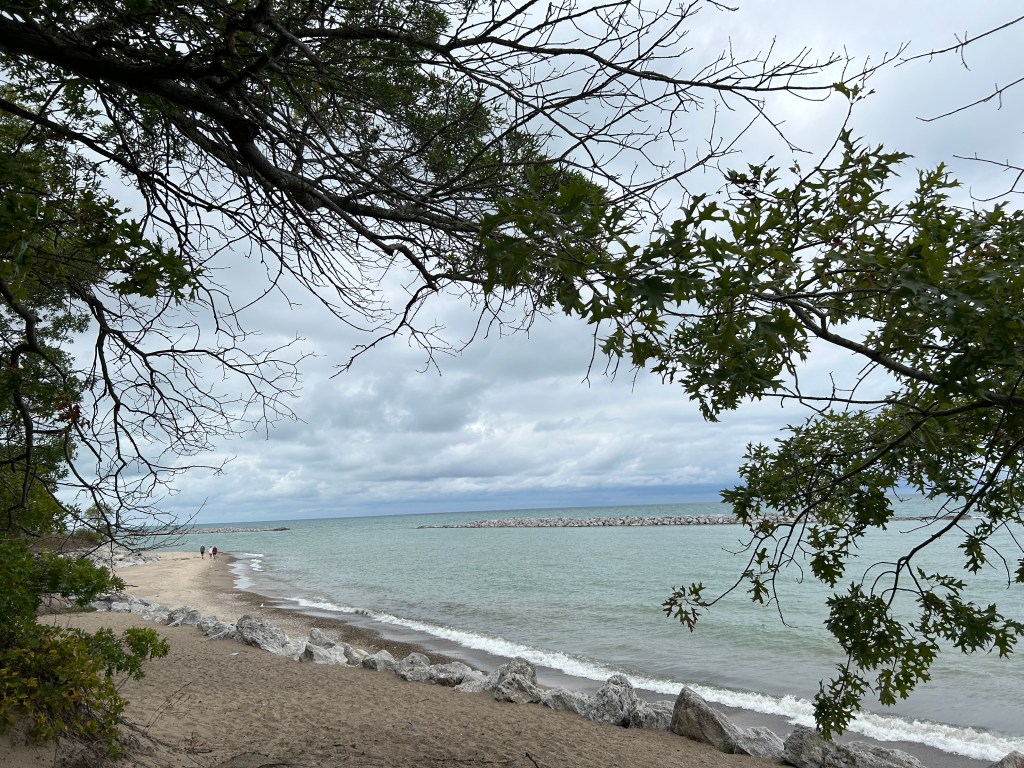
I’m not a scientist. I don’t play one on TV. I didn’t sleep at Holiday Inn Express the night before this little experiment. What I’m going to share is my results from a recent POTA outing at my home park, (is that an oxymoron?), Illinois Beach State Park, K-1000 US-1000. The park is in extreme northeast Illinois on the shore of Lake Michigan.
Without getting too sciencey, this seemed like a reasonable apples to apples comparison. Certainly, good enough for hobbyist use. I collected the data from our logging software and boiled it down as a spreadsheet, (not shown).
Bill and I were both operating FT8 and each of us was using a Xiegu G-90 at ten Watts. He was at one end of the picnic table, and I was at the other end. Both of our antennas were oriented northeast southwest.
Bill’s antenna was a Spark Plug antenna which is an end fed wire. Installed as a sloper, one end was about 25-30 feet up in a tree and the connector end was about 6 feet above the ground. His was a typical deployment of the antenna. A run of not more than 25 feet of LMR-100 connected the antenna to the G-90.
My antenna was an off-center fed dipole about 30 feet up in the air, flat top, between two trees. 25 feet of LMR-100 feedline connected the antenna to my radio.
What we were curious about was to what lengths does one need to go to have a great day out playing radio? At some point is there diminishing return with your impromptu antenna farm? With a dipole comes challenge of deploying an antenna which needs two supports, possibly three. Would I be rewarded by significantly enhanced propagation versus the easy-to-deploy end fed? We were about to find out…
In our outing one operator made 44 FT8 QSOs and the other operator made 40. Close enough. Measure it with a micrometer, mark it with a grease pencil, cut it with a chain saw.
Given the low noise floor out at the park neither of us were stunned by the results. For the most part we operated on 20 meters.
The end fed Spark Plug antenna from Sparkpluggear.com gave these results for 44 contacts: Average distance 1700miles with the farthest contact being 7023 miles away in Spain. Average signal report received, -7. Average signal report sent, 6.
The results for the OCF dipole from N9SAB, for 40 FT-8 QSOs: Average distance was 1728 miles with the farthest contact being in Ukraine. 8052 miles. Average signal report received -2. Average signal report sent -3.

The signal reports, (RST), are a measure of how well one station is hearing the other. “RST Received” is how well the other station is hearing you. “RST Sent” is how well you are hearing them. The strength of the received signal is expressed as plus or minus decibels. +19dB is about the best you should expect, (although you will see higher with particularly good stations), down to about -24dB. The dB value is the amount above or below some mathematically derived noise floor.
“Wait a minute. I asked you what time it is, and you told me how to build a clock.” If you want to get a lot smarter than me about SNR and Signal Reports, you can read this article by Tucson Amateur Packet Radio.
So, there you have it. Not much of a difference in our small sample size experiment, but if you value ease of deployment, the end fed antenna gave us the most bang for our buck with no appreciable loss of performance.
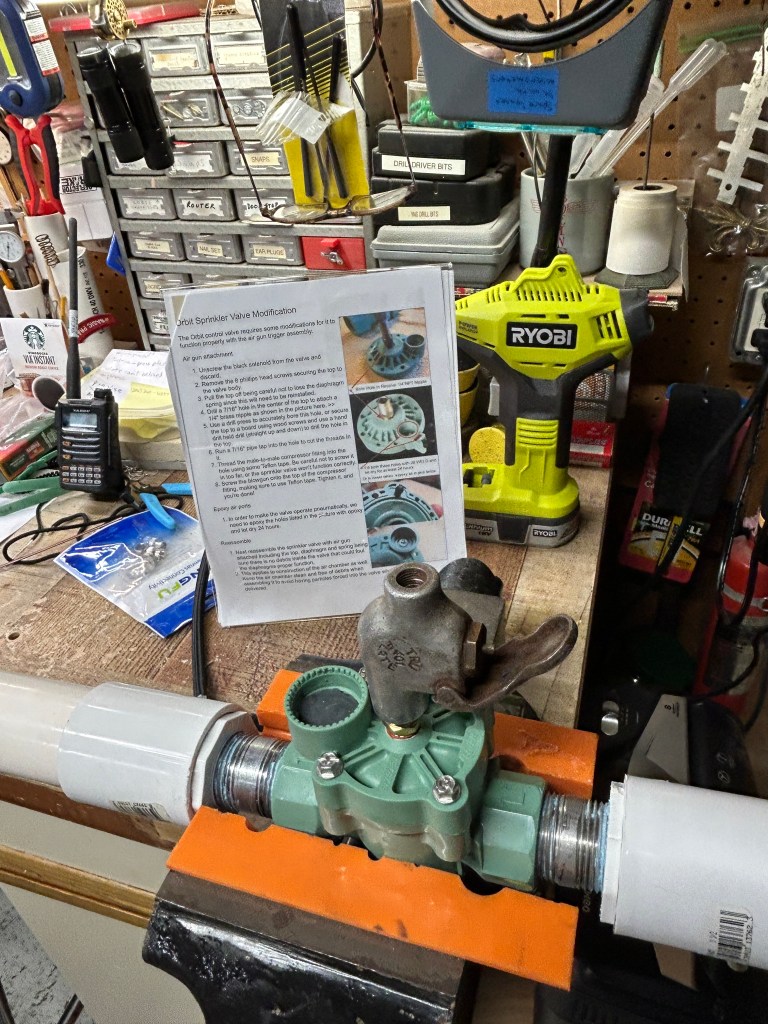
On the other hand, since we were also evaluating our DIY pneumatic antenna launchers, PAL, the dipole gives us twice the opportunity to “fine tune” the antenna launcher.
73
Bill
A Late July POTA Activation
As the saying goes, “There are those who travel light, and those that wish they’d traveled light”.
When it comes to Parks On The Air, unfortunately, I fall into the latter category. I know, it’s a problem, but I’m trying to mend my ways. One reason, (excuse), is that being a relatively new Ham, I love to experiment. Radios, antennas, operating modes, and creature comforts. It all adds up to more stuff.
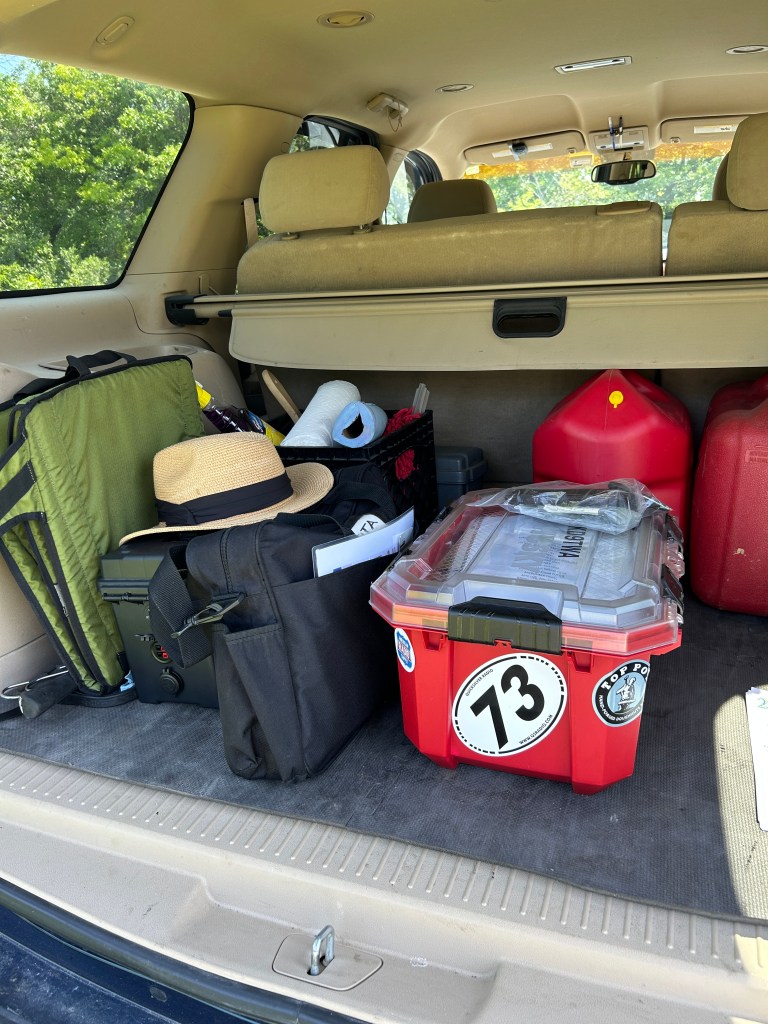
Another reason I don’t travel light is because I’m typically pretty close to my vehicle during activations. Think car-camping vs backpacking. Weight and bulk aren’t usually an issue for me.
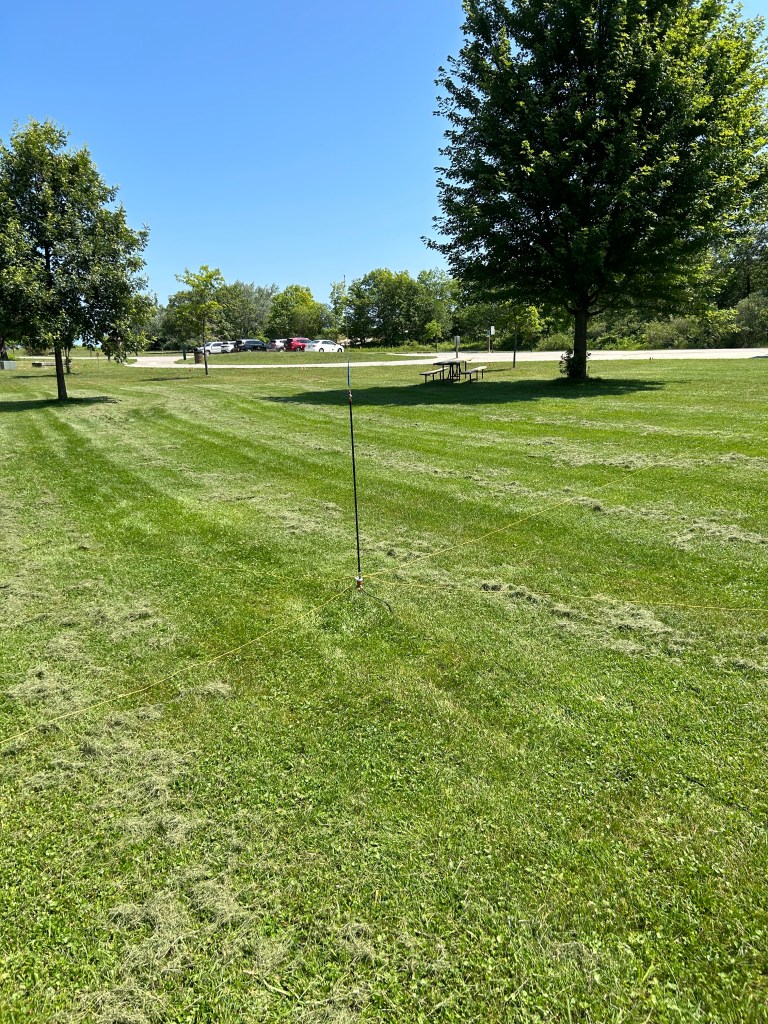
So today, a beautiful summer day with crystal clear skies, scattered clouds, and a gentle breeze blowing off Lake Michigan, I couldn’t resist heading up the shore to Illinois Beach State Park, K-1000, to do an activation.
My goal was to activate the park with minimal gear and effort.
I grabbed my Xiegu G-90 go bag, an extra LiFePO battery, a Hamstick, an MFJ 1979 whip antenna, a small tote full of necessities, a stadium seat, and a cup of coffee.
An hour later I was at the park under the shade of a large Oak tree setting up my station.
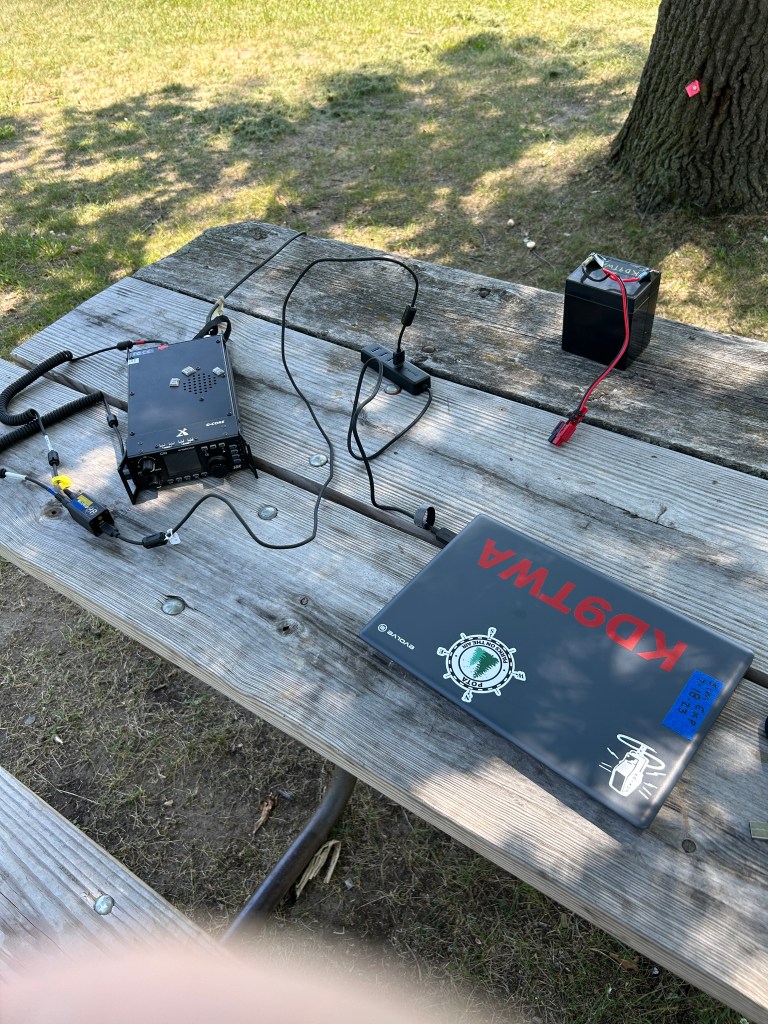
After a short time setting up, I was ready to get on the air. An FT8 activation of the park was my goal for today.

I self-spotted on the POTA page, fired up the radio and laptop and was on the air. I use HAMRS, GridTracker, and WSJT-X for logging and situational awareness.
K-1000 was officially activated in 30 minutes. After an hour 20 contacts were in the log. 30 contacts for the day. Not bad for a Hamstick stabbed into the sandy soil and 15 Watts.
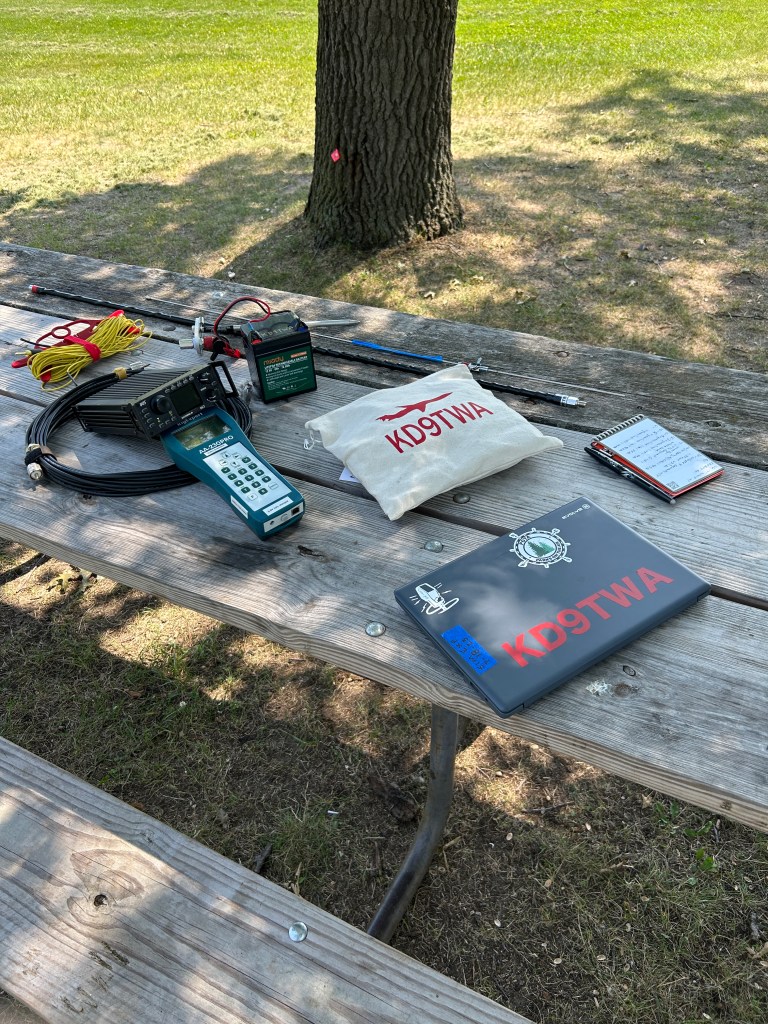
My Xiegu G-90 go bag consists of a repurposed computer bag into which is packed:
- Xiegu G-90 HF radio
- DigiRig external soundcard and connectors
- 6 Ah LiFePO battery
- 49 feet of coax
- a complete Super Antenna
- an antenna analyzer
- Evolve III mini laptop
- RocketBook Mini notepad
The antenna analyzer was brought just in case. Not used. Doggone it.
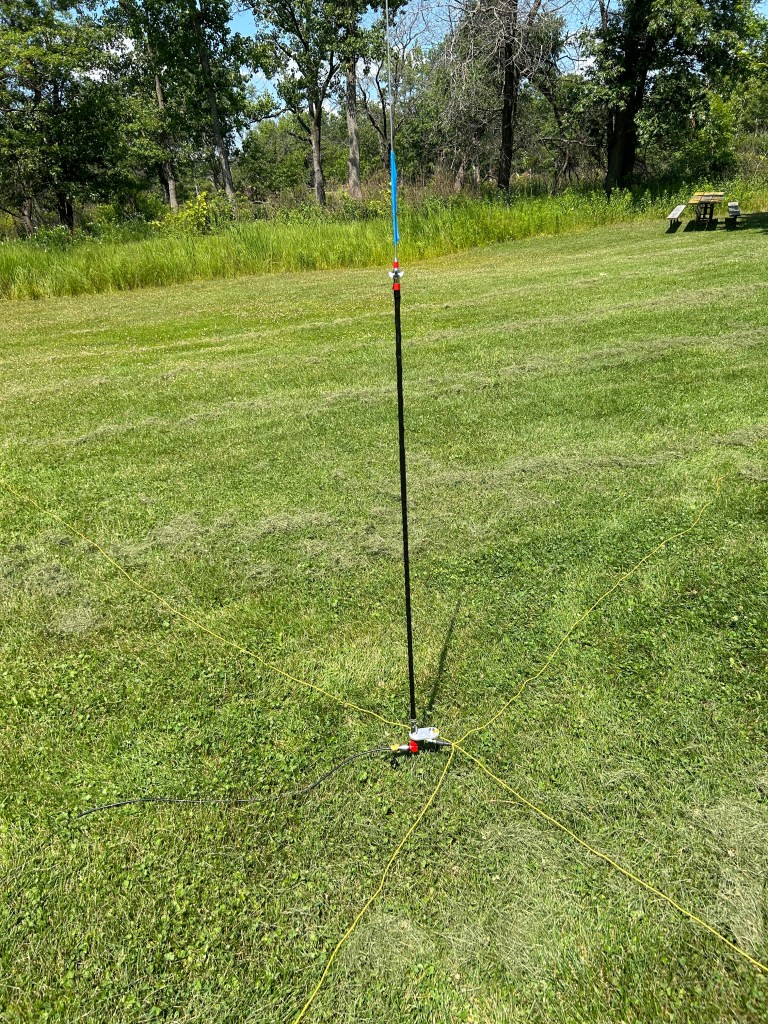
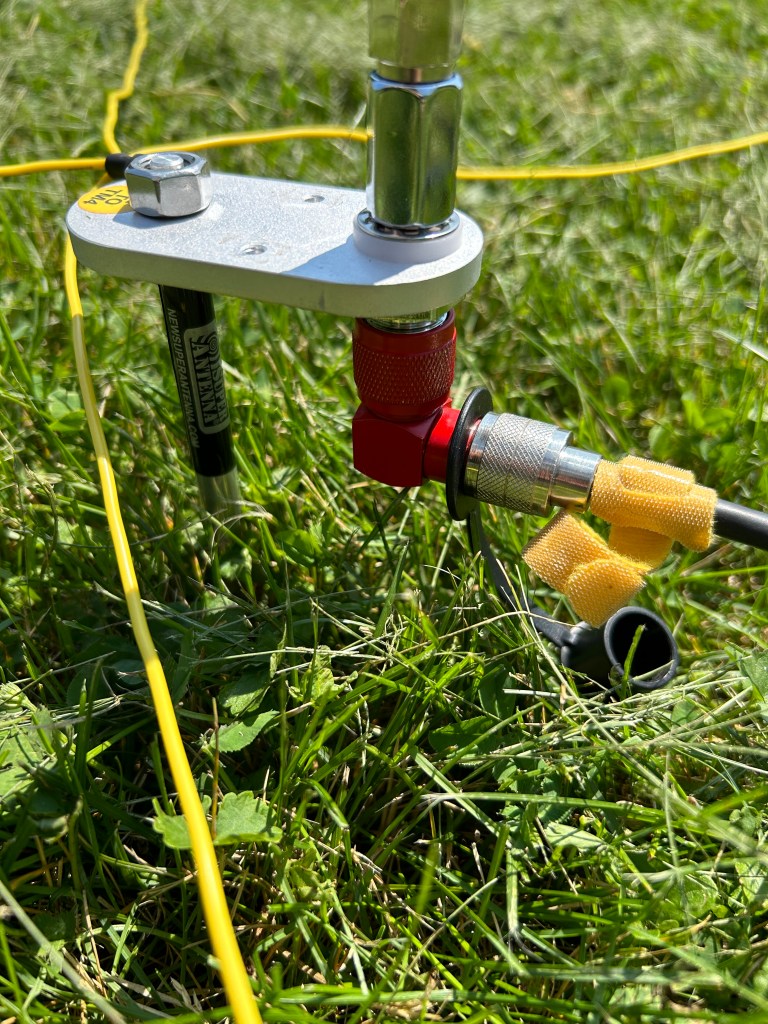
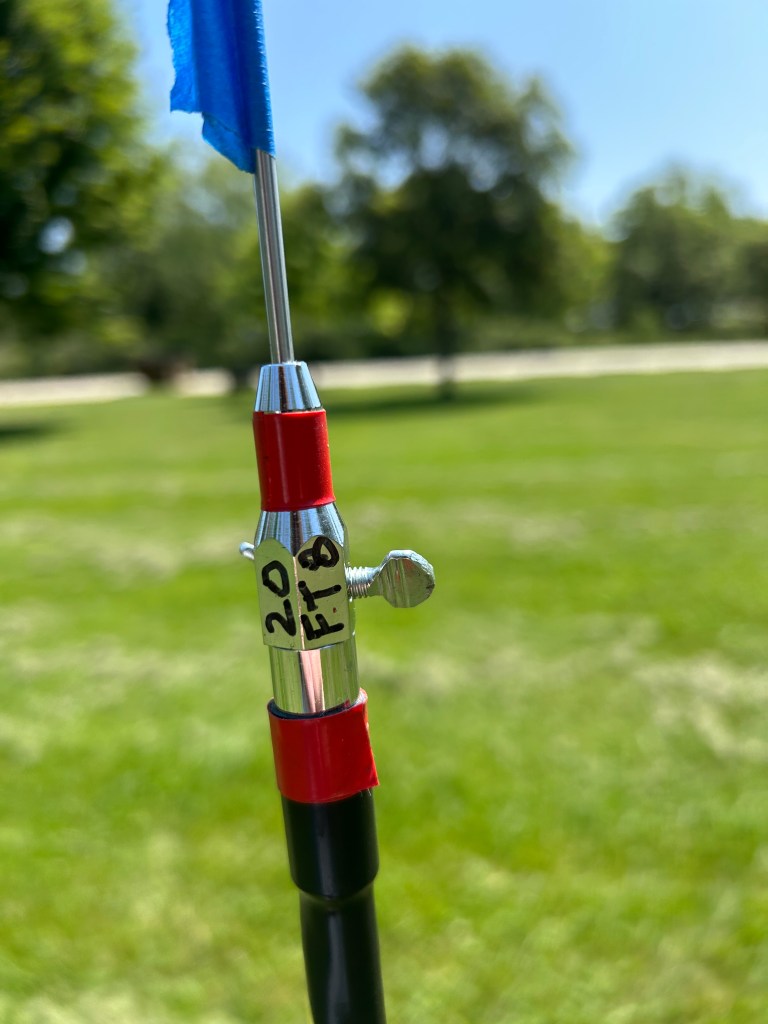
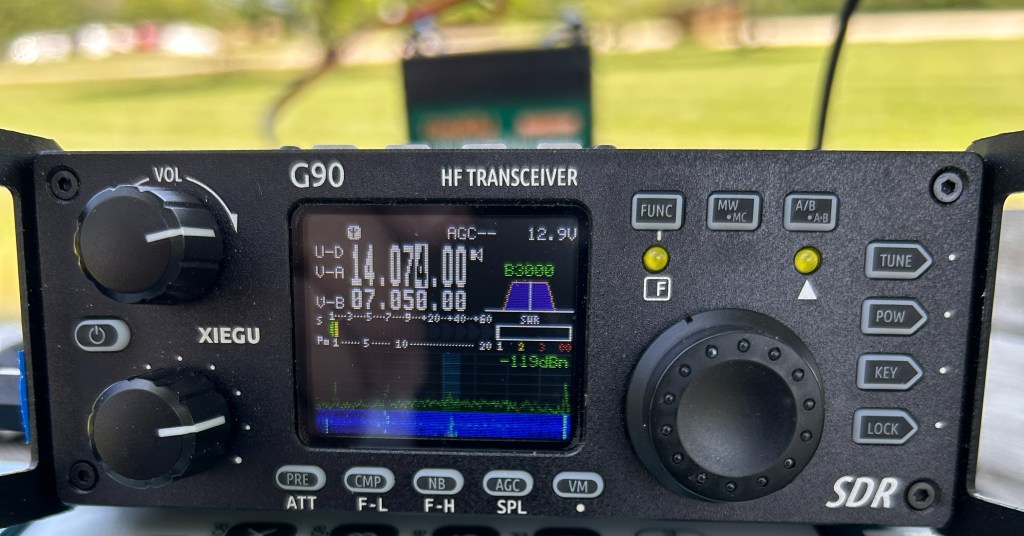
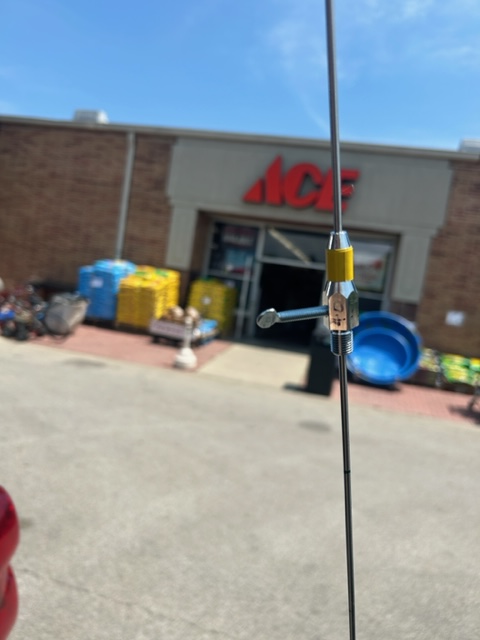
The antenna is a 20-meter Hamstick tuned to 14.074 MHz for FT8. The Hamstick is mounted to the Super Antenna UM3 mount and SuperSpike, plus the four ground radials. 49’ of RG8X coax connects the antenna to the radio. In the right hand photo below, note that the Allen head setscrews on the antenna have been replaced by thumbscrews
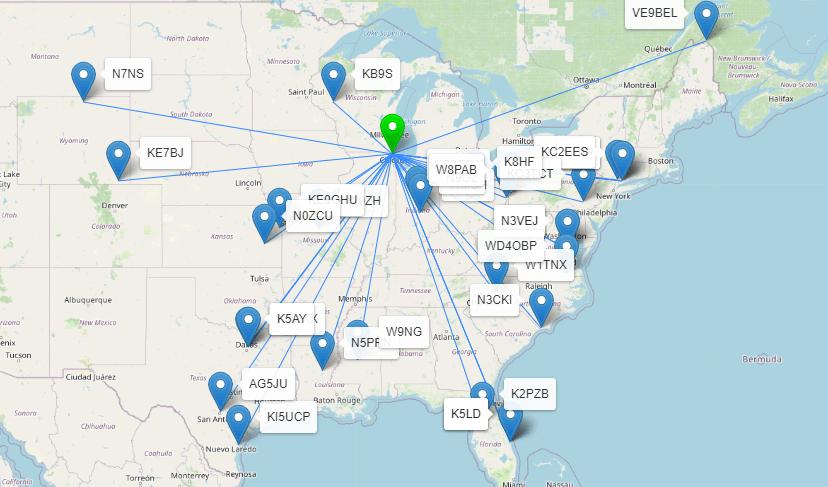
My contacts came from about 260 degrees around to about 230 degrees of my location. The southwest area of the country was unrepresented.
After an hour of FT8 I decided to give SSB a whirl. My reception was great. I was hearing stations from all over the country. Reaching other stations…not so much. My emphasis was on contacting other parks, Park to Park, or P2P in POTA-speak. I thought I might have better luck with the MFJ whip. Up to that point I had been using the FT8-tuned Hamstick with the G-90’s internal tuner. Whip up, ears on, PTT…nothing.
Note to self. When switching modes on the G-90, don’t forget to increase the transmit power. D’oh! When one changes modes on the Xiegu G-90, power drops back down to minimum. One Watt doesn’t cut it on SSB. After I increased the power way up to 15 Watts, I had better success.
Nothing great on SSB, but better. A few single parks, a two-fer park with two operators, a two-operator park, and two WY stations.
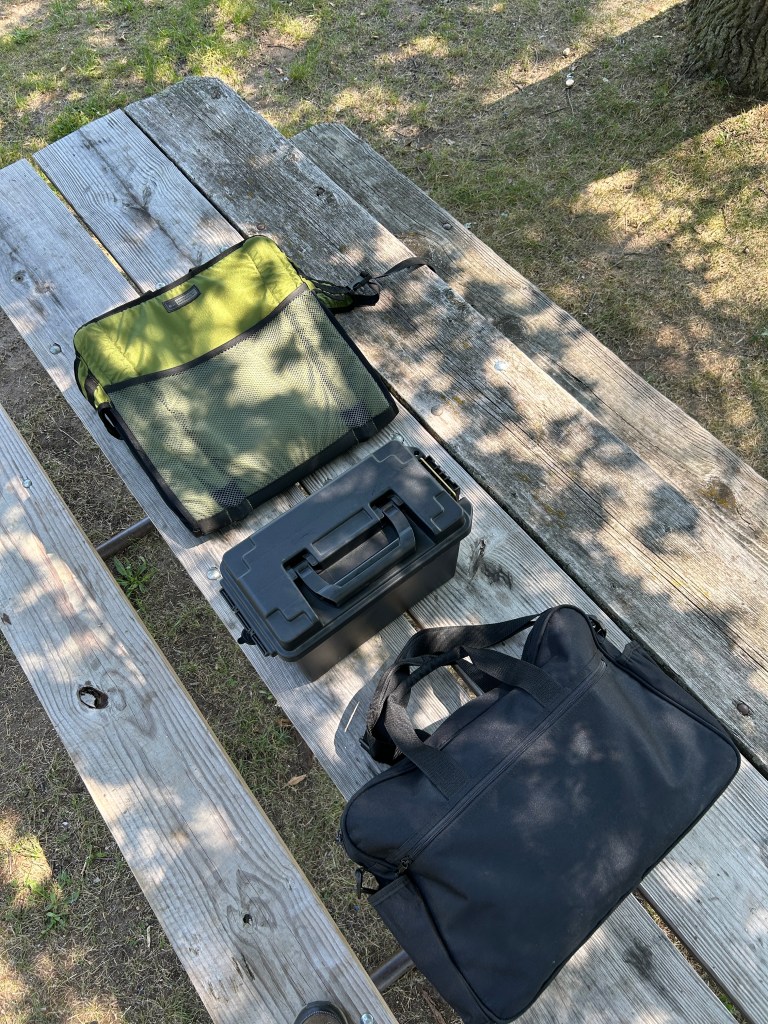
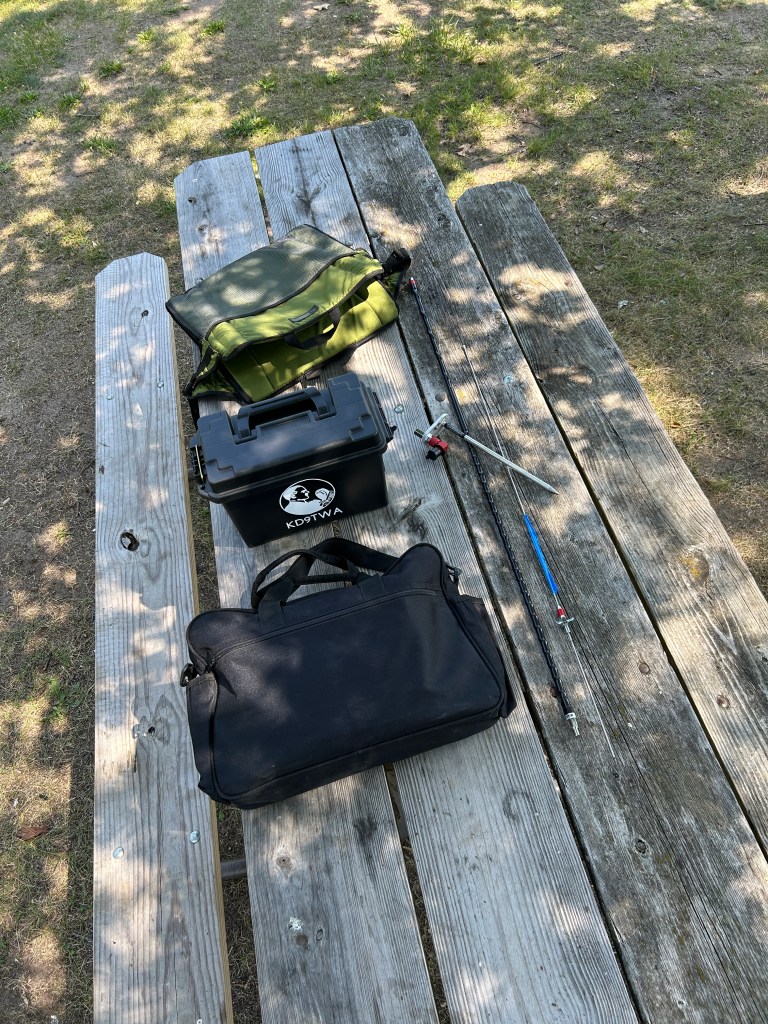
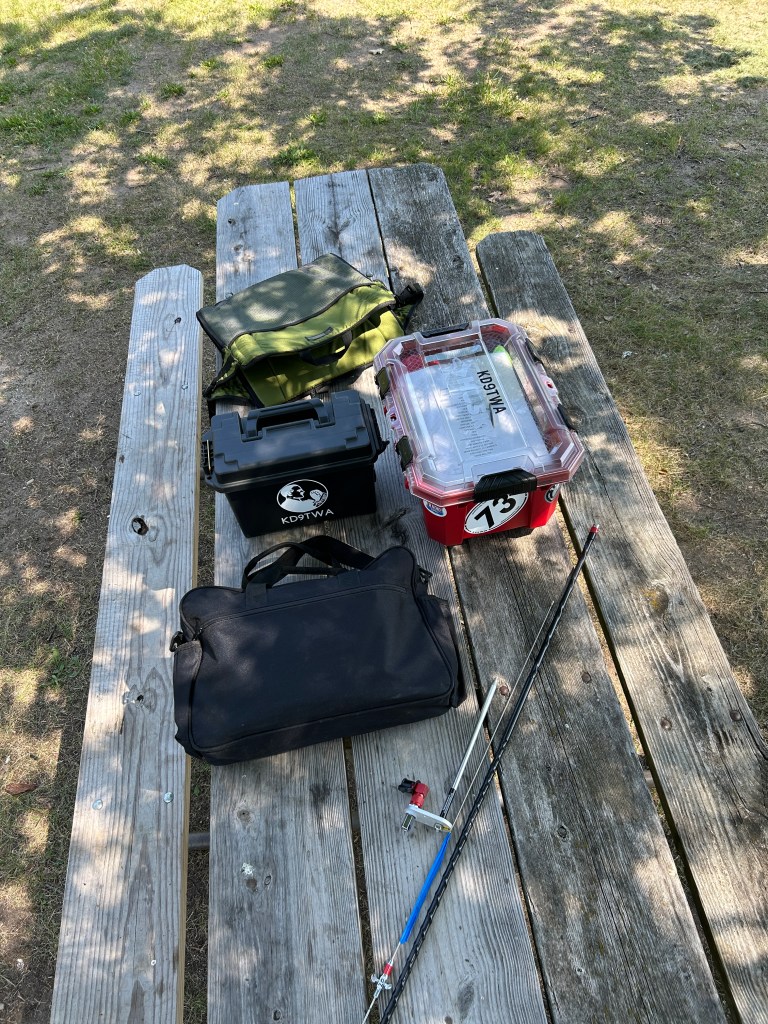
Note #2 to self. Leave the tote full of “necessities” at home next time. Nothing from that tote was ever used.
Note to self #3. The extra battery went unused. I hope it doesn’t miss me the next time I go to the park.
See, I’m getting better.
That was about it. The Cubs baseball game had started, and I wanted to beat the Friday afternoon rush back to my QTH in Chicago’s northern suburbs, so I packed up and headed back home.
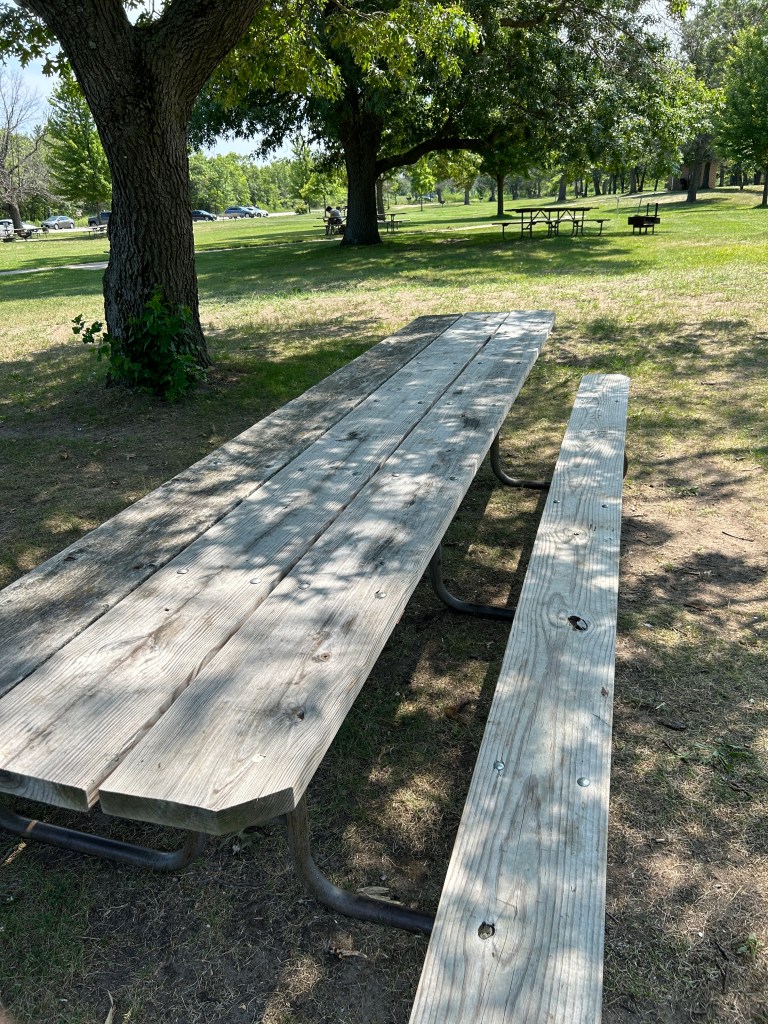
Today was a beautiful summer day by the lake playing radio. During an activation I make it a point to get up from the picnic table, stretch my legs, take a short walk, and enjoy the scenery. Being “in the moment” is just as important to me as the activation itself. Make some time to smell the roses.
73 from Bill KD9TWA
On the Shore of Lake Michigan Playing Radio
The short version: A beautiful July day, POTA, K-1000, 34 contacts, Hamstick stabbed into the ground.
After the hot, wet, smokey weather we’ve had lately in the Chicago area it was a good great day to take a trip up to Illinois Beach State Park for a quick POTA activation. Sunny, 75 degrees F and a light breeze off Lake Michigan.
In the interest of packing light, I brought a Xiegu G-90, a small LiFPO battery, an Evolve III mini-laptop, an antenna analyzer, and a 20m Hamstick. This wasn’t a DX-pedition.
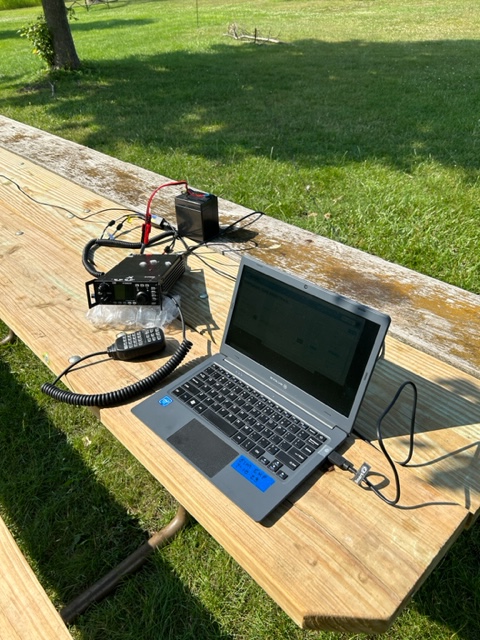
On the radio end is the Xiegu G-90 interfaced to the small laptop via the flawless DigiRig external soundcard. My plan was to focus on F4 and FT8 operations today, but I did make a couple of SSB Park to Park contacts too.
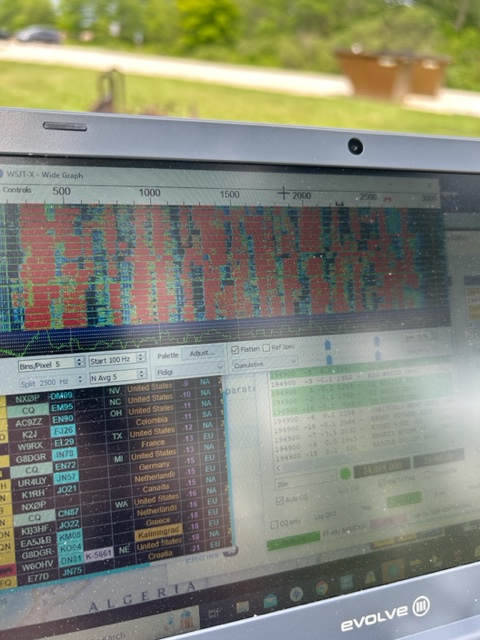
The 20-meter band was hoppin’.
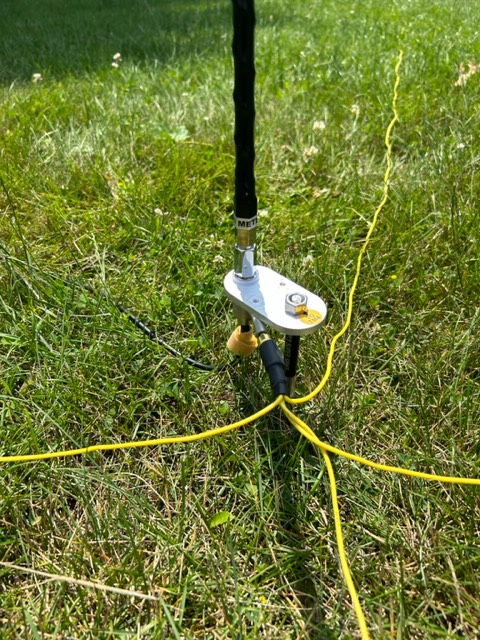
The antenna system, (sounds fancy, right?), was a 20m Hamstick screwed into a SuperAntenna UM3 SuperMount attached to the SuperSpike. The helically wound whip, AKA Hamstick, was screwed into the SuperMount and the whole thing stabbed into the ground. The moist, sandy soil made pushing the stake into the ground a breeze.
I attached a set of four ground radials and proceeded to tune the antenna. The ground radials are just laid out in four directions from the antenna. Nothing scientific. Whatever space and obstructions permit.
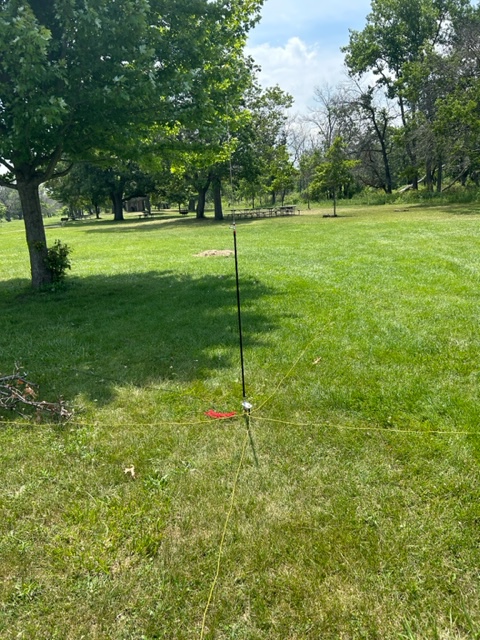
The results after tuning weren’t spectacular, but there comes a point of diminishing returns. The 80/20 rule applies. It usually takes 20% of the time to complete 80% of a task while it takes 80% of the effort to complete the last 20%. I tuned the antenna for 20 meter FT8 and called it good. The G-90 has a great internal tuner BTW.
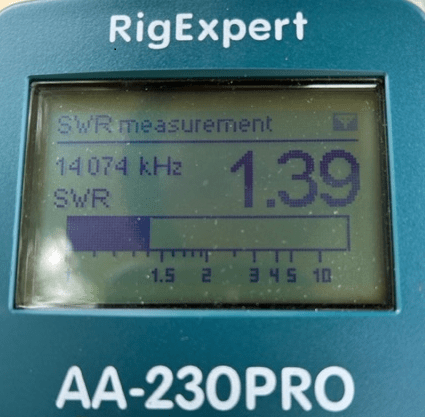
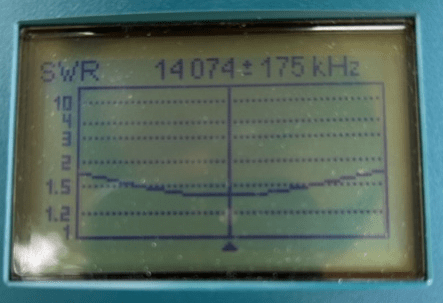
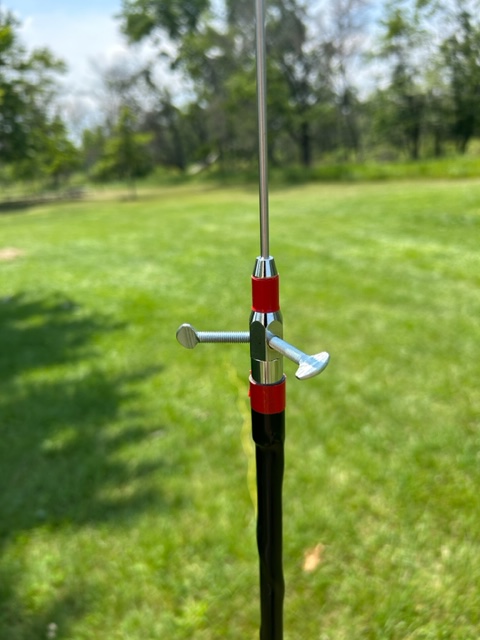
In his book Successful POTA: The WV1W Illustrated Guide to Parks On The Air, author Don Dickey suggests replacing the Allen wrench setscrews on your Hamstick “stinger” with thumbscrews. Mine are 10-32 thread, but bring the stinger with you to the hardware store just to be safe. No more misplaced Allen wrenches. Yay!
The final outcome was picture-perfect day spent at the lake with 34 contacts in the log, including a Park to Park contact with K2L, one of the 13 Colonies Contest stations. Max power today was 15 Watts.
As far as the bare-bones station goes, I feel like it was a winner.
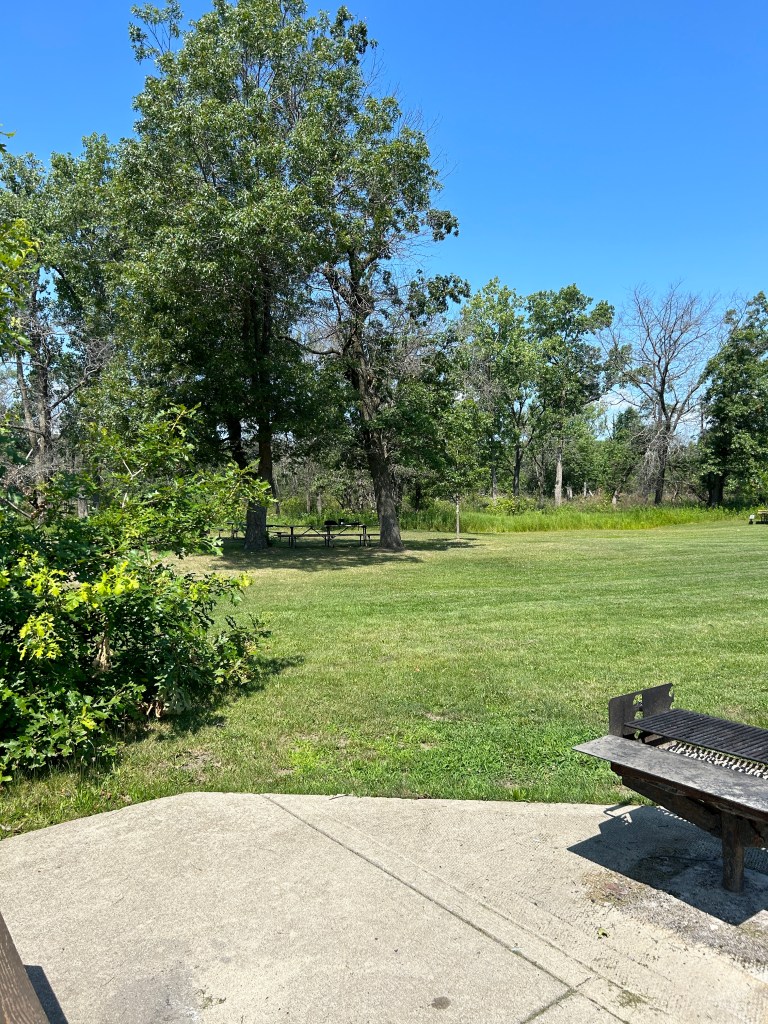
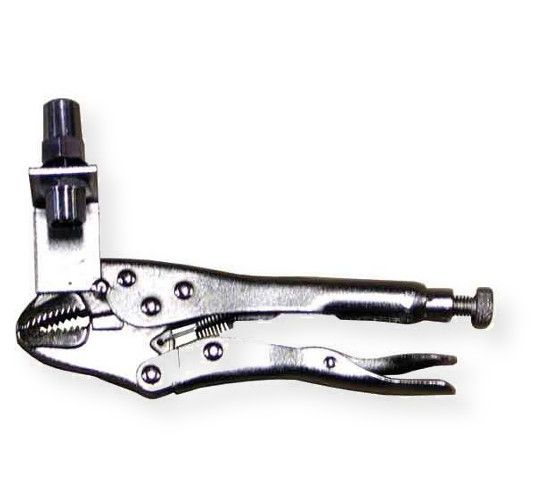
Next time I’m going to try a locking plier setup similar to the SuperMount. The park has an abundace of heavy duty metal BBQ grills scattered around the park.
Seven Tree
Out with the Old and in with the New (Year).
Or, what a difference a day makes.
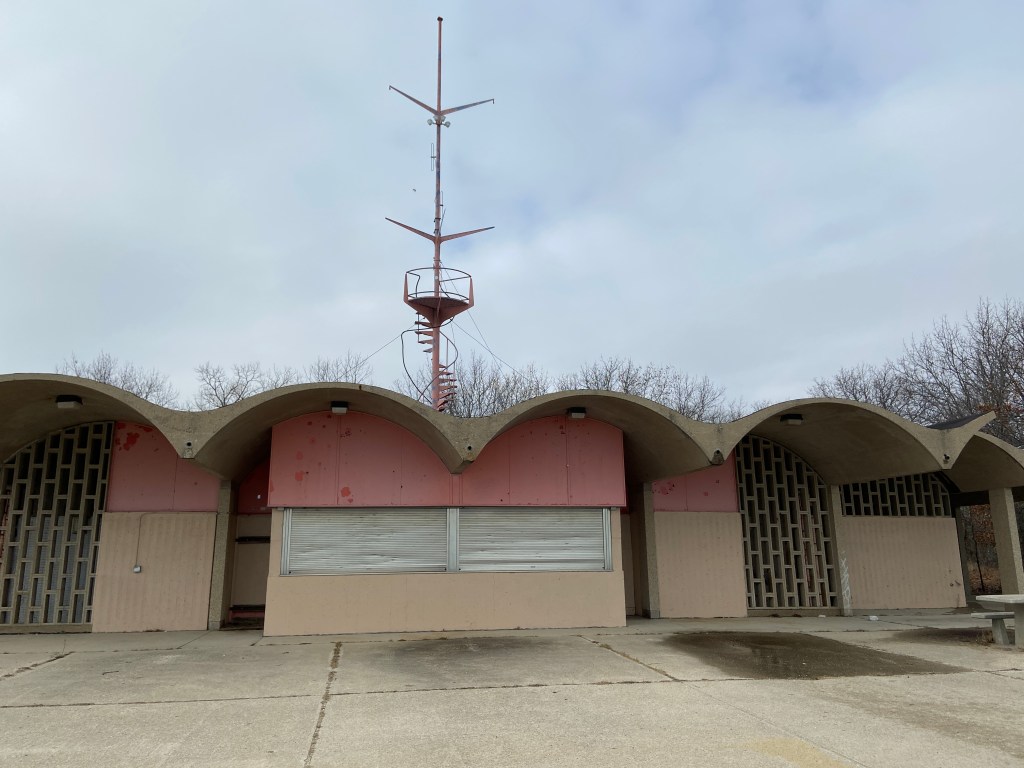
So I loaded up the truck and moved to…oh wait, that’s another story. I headed to my nearest POTA park, The Illinois Beach State Park, (K-1000 in POTA-speak). The park is right on the shore of Lake Michigan, about an hour north of downtown Chicago. As you may have guessed, the park was pretty empty on December 31, 2021. Overcast, 37 degrees, a light breeze and Lake Mishi-Gami was as calm as a farm pond. Fantastic conditions for January 31 in the Chicago area.
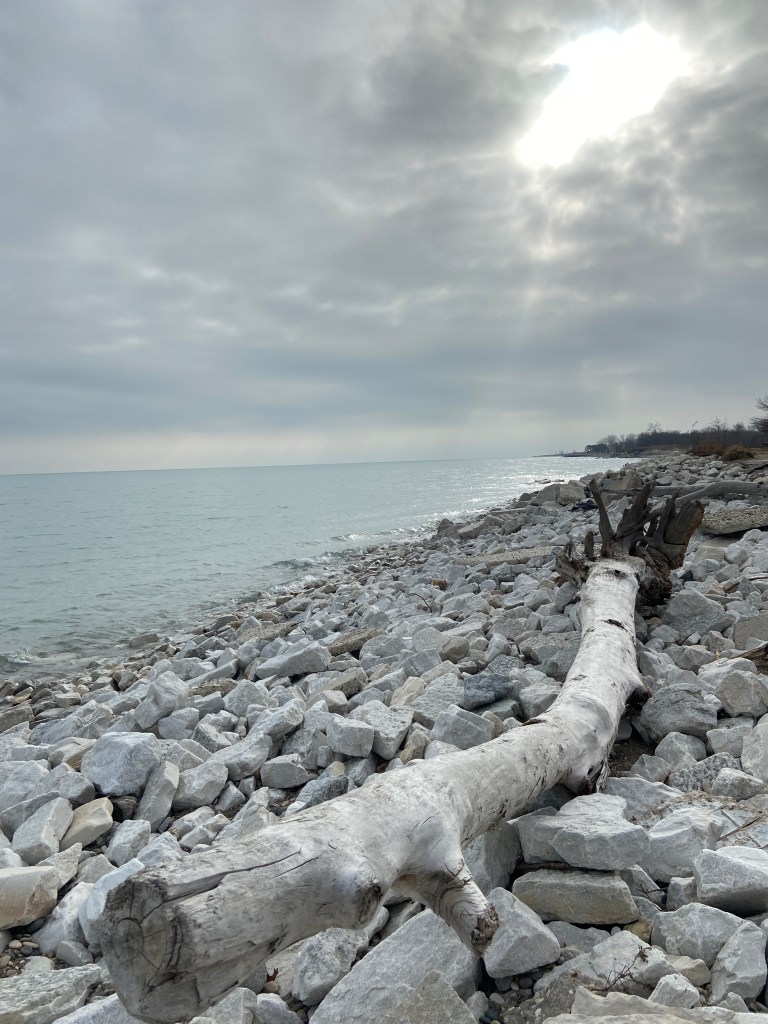
As we closed out 2021 and rang in 2022, I figured I’d do some Parks On The Air.
I chatted for a while with another POTA activator, Arron, who had already begun making contacts on CW. He was set up with a small campfire and a big antenna.
After our chat I moved to a different part of the park and set up shop. I was on the air in no time and made close to 50 contacts in about an hour. Not record setting, but I went and took some of the accompanying pictures while stretching my legs and making New Years Eve dinner plans with the XYL.


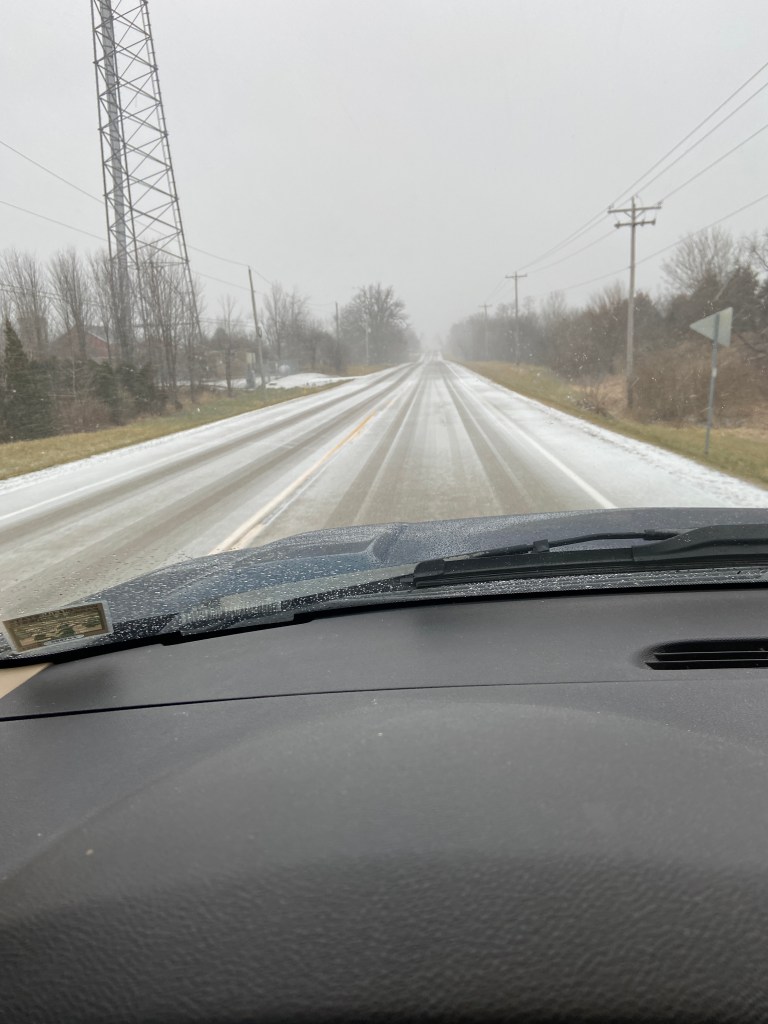
On the Great Lakes, conditions can change dramatically in just a short time. Today, January 1, 2022, I decided to go back and activate K-1000 again. Notice anything different about the lake? It has been less than 24 hours since I took the first group of pictures. The skies are still overcast, but the wind is howling, (in Chicago we call it The Hawk), the snow hadn’t started yet, and the temperature is hovering around freezing.
Well I made enough contacts to activate K-1000, (K-K), when, ring-ring-ring. “Are you up at the park again?” I could hear her eyes rolling, but she knows I have a problem. What’s the old idiom, Behind every great man is a great woman…A SEXIST WOULD SAY.
Today I was using a helical whip antenna with a magnet mount on top of the Family Truckster. When I packed-up, the antenna had loosened from the base and the “stinger” had vibrated loose from the main body of the whip because of the wind buffeting. Note to self, 3/8″ spanner wrench.
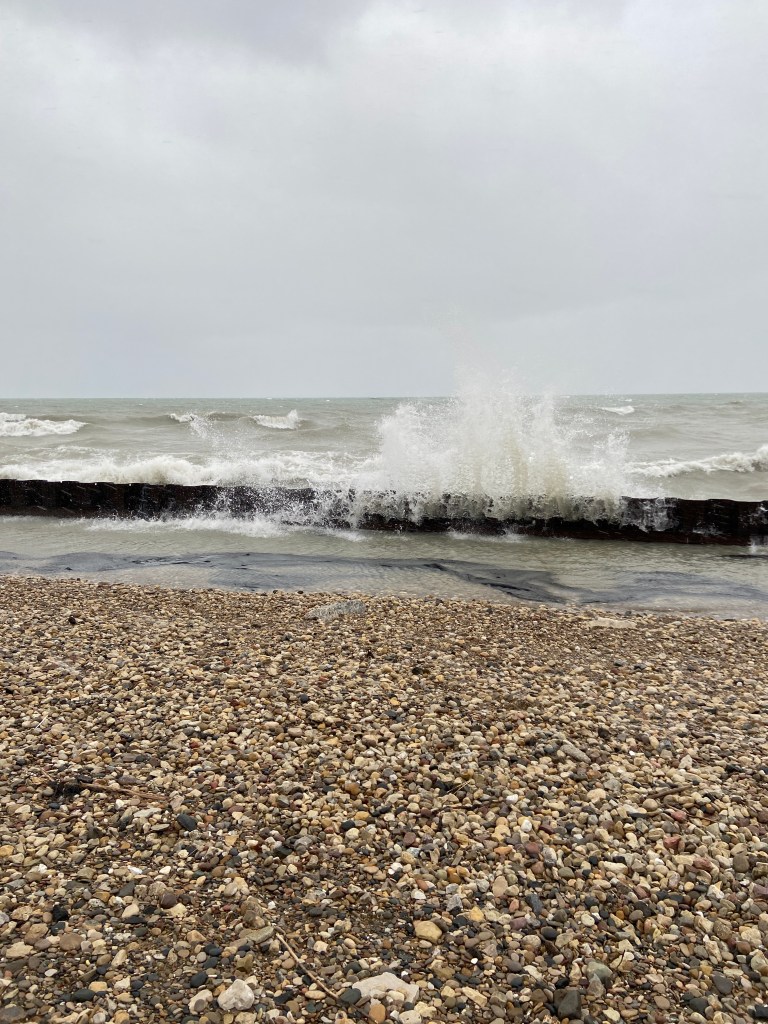
Watching the spray shoot 20 feet up into the air, I couldn’t help myself from taking a few picture. Right on the shore, with the wind whipping, I wished I’d had some of those gloves that work on a phone screen. I could only take a few pictures at a time before my hand had to get some pocket time. I wouldn’t have taken any if it weren’t for two layers of pants, six layers, (really), on top, neck gaiter, wool hat and gloves.
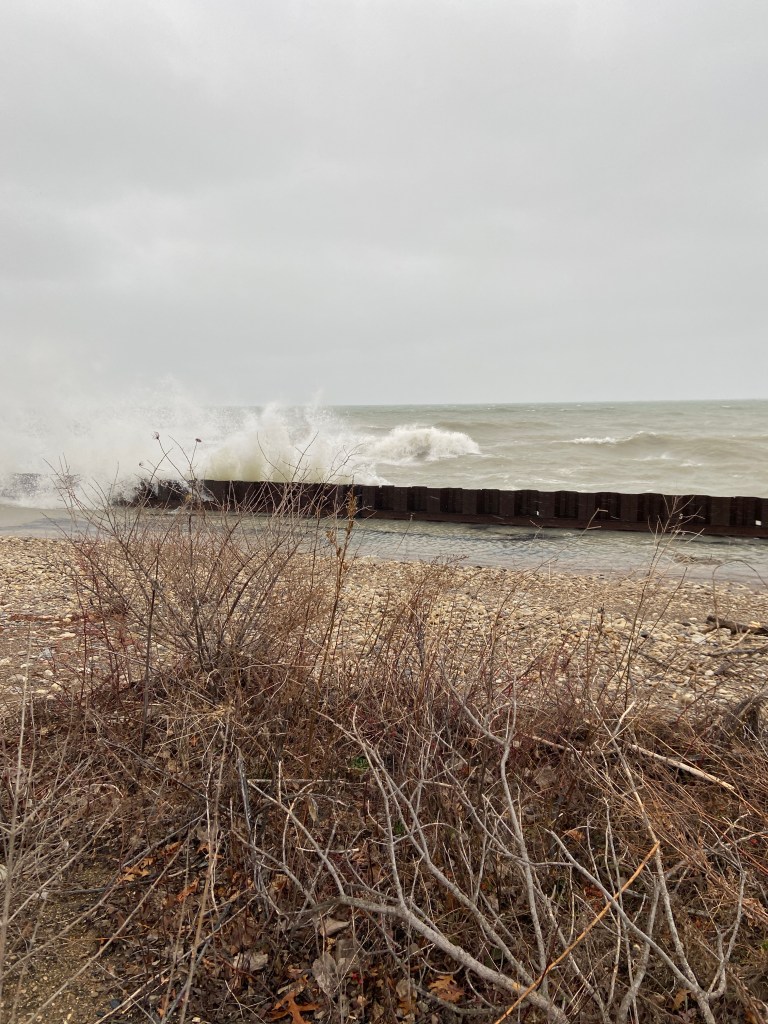
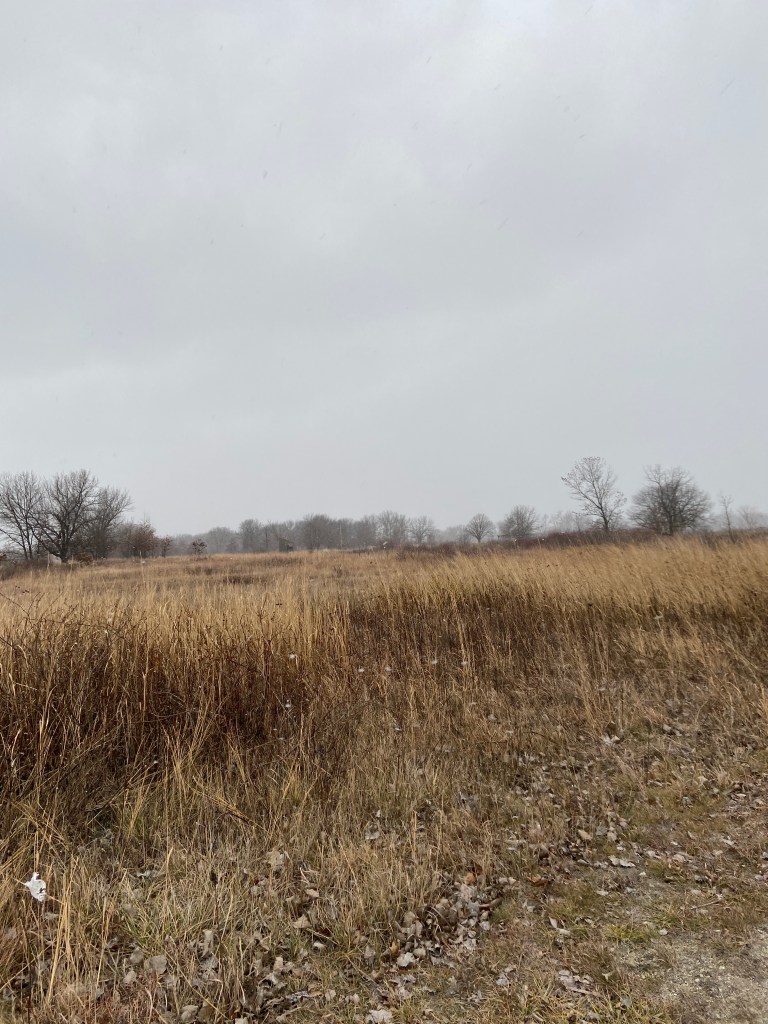
Did I mention the dissimilarities in atmospheric conditions after the earth makes one rotation on it’s axis, especially when standing at the littoral zone of very large body of fresh water and a weather map displays tightly packed isobars?
73 Everyone, and Happy New Year. I’m glad to have 2021 in the rear view mirror.
Why I like POTA and how I found Carnegie Hall.
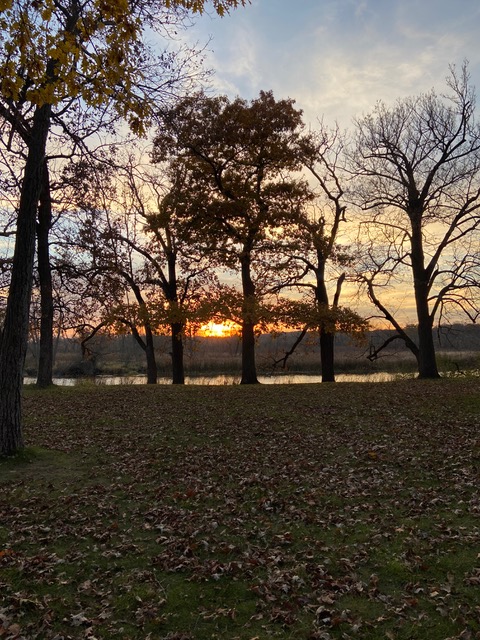
I was thinking about why I find Parks On The Air, POTA, attractive. I’m a relatively new “Ham”. I’ve only been licensed since January of 2021, but since then I attained the General then the Amateur Extra license. Check out my post on online study guides.
There is the obvious element of POTA which is operating from remot(ish) locations. Getting outdoors, seeing different locations and enjoying the changing seasons. POTA can be a year round sport.
In addition to the outdoorsy aspects of POTA my biggest pleasure has come from improving my skills as an operator…much improved.
On one end of the radio operator spectrum you can scan the dial for hams calling “CQ”, (seek you). When you make contact you generally have a short chat or QSO at which point you move on to your next QSO.
When I was first getting introduced to HF communication, I was curious if there was a more organized way of making contacts. Enter HF nets. Like UHF/VHF nets, these are more likely to be organized and scheduled regularly. HF nets do attract a lot, (a lot), of participants given the nature of long distance HF communications. You could easily be the number 50 in the queue, so if you’re itchin’ to talk this might not be the ideal method of getting on the air. There is a lot of standing by.
At the other end of the spectrum is “contesting”. Contesting is the high volume, high speed portion of the hobby. The idea is to make as many contacts as possible during the time frame specified in the rules of that contest. If you’ve listened to a contest in progress it probably sounded very chaotic. It’s not, it is just very fast paced, with each contest specifying the elements needed during each exchange to count as an official contact for that contest. Contests are based on bands and times. That is, there is a start time and an end time and the band(s) on which the contest will be operating. You still must scan the dial to find the contesters.
I’m not very good at it, but contesting is fun once you get comfortable with it. Notice I said comfortable, not good.
That brings us to POTA. Right off the bat, you can find the POTA stations who are at the “P” by going to parksontheair.com and in the top banner clicking on “POTA Spots”. The page that is now displayed can be filtered by band and mode, (CW, SSB, FT8, etc.). If you are wanting to do 40meter SSB you would select those and the page would now display who’s on the air, the park they are operating from, the frequency they are using, when the last time someone heard them, and a few other bits of information. Tune them in, make contact, exchange pleasantries, 73 and log your new friend.
Wait, what? That sounds like shooting fish in a barrel. Well not exactly…it’s easier!
You know where they are. They want to talk to you and have a short QSO, it’s going on all day, every day, usually till shortly after sundown. The big deal, at least to me, is how much doing POTA will improve your radio skills. It’s kind of like contesting-lite.
Before we go any further, a couple of terms. The station shown on the POTA website soliciting calls, (CQ POTA), is called the Activator. He/She is “Activating the park”. The station calling the Activator is called a “Hunter”. Once the Activator makes ten contacts he has Activated the park. Yay! A certain number or types of activations earn awards. The same applies to hunters. So, without leaving the comfort of your shack you can earn awards, and at the same time help the activator score points. Win-win.
I’ll make a post about specific operating details soon, but a minimum contact consists of you calling the Activator with just your callsign; them responding with your callsign, a signal report and their park number; you respond with a signal report, your location, and “73“. It’s really that simple, and not generally at the breakneck pace of a contest.
So how will POTA make you a better operator? The way POTA is structured, you can spend more time making QSOs and less time searching for Activators. That allows more time for getting into a grove making contacts. You really will get better once you find your rhythm.
For me as a new-ish amateur radio operator I started out Hunting. It was the logical place to start…very slow paced. In another lifetime on the radio, I learned that knowing what was going to be said was just as important as the actual words themselves. This holds true for POTA exchanges. You will be amazed what you can pull out of a very weak and/or noisy signal when you know what is supposed to be said. Since the POTA exchanges are brief, you’ll catch on quickly. Just listen for a few minutes and you’ll be ready to jump in. See, you just got better and you haven’t even left home yet.
Rather than me going over all the “lingo” and such, check out a great YouTube video where Mike, K8MRD, teaches his neighbor how to POTA. It really filled in some of the gaps for me about doing Parks on the Air. Mike is a prolific, right to the point YouTuber. You’ll see the rhythm at which Mike operates. That won’t be you, (or me), at the beginning. but once you get that cadence down you’ll be making tons of contacts.
Like the tourist who asked the New Yorker, “How do I get to Carnegie Hall?” To which the New Yorker replied, “Practice, practice, practice.”
Seven tree
December 2021. What the heck is POTA?
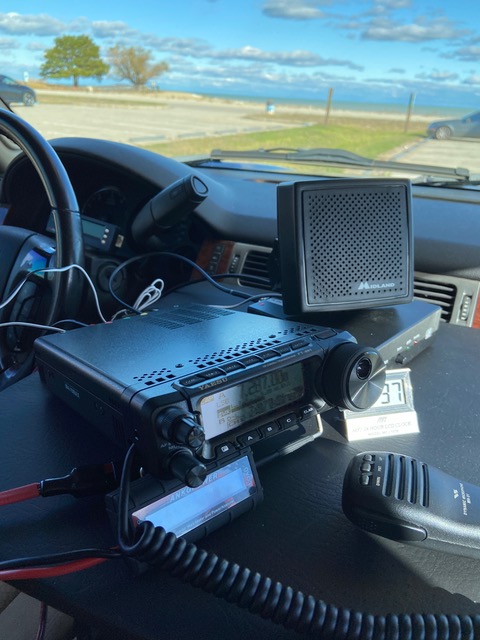
POTA is the acronym for Parks On The Air. It’s a relative of Islands On The Air, (IOTA), Summits On The Air, (SOTA), and even World Lighthouse On The Air, (WLOTA).
From the Parks On The Air website, they say POTA is …international portable amateur radio operations that promote emergency awareness and communications from national/federal and state/provincial level parks.
Any properly licensed ham can participate and earn awards. You must register with this all-volunteer organization to reap the full benefits of the POTA community, but you can give it a test drive without registering. You’ll probably register once you find out how fun it is.
For the full year of 2016 the ARRL did a parks on the air thing commemorating the Centennial of the National Park Service to Promote the capabilities of Amateur Radio to the general public through operations at eligible NPS Administrative Units, according to the ARRL. It was called National Parks on the Air.
It was such a huge success that a group of volunteers took the ball and ran with it giving us POTA as we know it today.
Operators can participate in POTA from home as a Hunter or afield as an Activator. Two Activators can contact one another for a “Park to Park” contact which is another recognized award category. POTA is also a good place to practice your low power, (QRP), skills. Phone, check. CW, check. Digital, check. Want to activate multiple parks in one day? Oh yah, there are awards for that too. There is something for everyone.
One nice feature of POTA is that you can self-spot through their website, which means that you advertise what frequency and at which park you are operating. Hunters can find you with ease on a computer or smartphone. After making a QSO, most hunters will re-spot you which is then updated on the website. As an activator you’ll have your ten contacts in no time. As a Hunter, you’ll be able to pile up those QSOs.
After you listen for a while you’ll notice there are many couples who do POTA. It’s also quite common to hear, “Stand by for a second, (or third or even fourth), operator”.
My suggestion would be to visit POTA and check out the great info there. While you’re there you might as well register.
Soon I’ll discuss how POTA can make you a better ham radio operator. Believe me, it really will.
Seven Tree
How to increase your ratings, (or if nothing else, pass the FCC Technician Exam).
A friend recently asked me if I had any recommendations for studying for the FCC Technician Exam. I said yes I do, and here is what I said. I told my friend that I am partial to the FREE online study tools. The following three are my favorites. Each has it’s own advantages, but it really boils down to what your learning style is.
All three are interactive and give immediate feedback. You’ll gain the most from registering for them because the study guides keep track of your progress if you are registered.
I started studying for the “Tech” license in December of 2020 and by March 2021 I’d advanced to Amateur Extra. I encourage folks who have the time to keep studying for the next higher license on once they pass the Tech exam because you’re already in the study mode and that study mindset helps quite a bit.

If you aren’t aware, all of the questions, (and answers), for all three license classes, Technician, General and Amateur Extra are publicly available and are known as the question pool, or pool. When you go to take the exam, the questions, (and answers), are taken directly from the pool. The questions and answers are exactly the same as those in the online study guides. Nudge, nudge, wink, wink.
First up is the study guide from the American Radio Relay League, ARRL. The ARRL is the national association for Amateur Radio founded in 1914. Head over to the ARRL for their study guide.
Next is HamStudy by Signal Stuff. They are, in part, an online retailer who’s products are of particular interest to Technicians, but also “…dedicated to enhancing the use of technology in the amateur radio licensing technology.” I am very pleased with both their physical and intellectual products. Here is where to get started, hamstudy.org.
Finally, HamExam by Ron, NA0Q. Ron says, “I originally built this site in 2003 to help my wife earn her Technician license, and since then it has helped thousands of hams get their license and upgrade.” He is realistic about online test prep and says…”that memorizing the test is no substitute for understanding the material. If you have problems with certain questions, please search out more information on those topics.” Truer words were never spoken.
I can personally say that one product is no better than the other, just different. I like and use all three. Do read the fine print though. Not because there are any “gotchas”, but because there is a lot of useful functionality that isn’t right there in your face.
Solar data added to the home page, (just like the cool kids all seem to be doing).
Since this is an amateur radio blog, I figured it might be helpful to add the solar data widget from N0NBH.com.
In my many years of traveling I found this gem.
Where oh where?

Nothing to do with Amateur radio of course, just for fun.
 KD9TWA.com